


MUTUAL AID IN ORGANIZING
One of the lessons that has come out of the Twin Cities ICE resistance has been the important role that mutual aid has played in that effort. Since “mutual aid” is a term that means more to some than to others, it is worth taking a little time to consider what it means, and how it interacts with the issue organizing practiced by Metro Justice. The basis of most mutual aid organizations is the recognition that the economy of a hierarchical capitalist society like ours is designed to concentrate wealth and power in the hands of a few, and therefore will not meet the needs of all citizens, especially those that it makes vulnerable through (intentional) criminalization and marginalization in the process of concentrating wealth for a few and prioritizing the most productive workers among the rest. Mutual aid organizations work to meet those needs, and in the process give everyone involved the political education and training needed to envision and enact anticapitalist goals. Issue organizing offers similar education and training but seeks to achieve specific structural goals. For Metro Justice these have included higher minimum wage, universal healthcare, and local ownership of the energy grid, all issues aimed at increasing equity, decreasing centralization of power, and materially improving the lives of people marginalized under capitalism. These issues, while “winnable,” each in its own way, are also long-term fights that have educated generations of volunteer organizers and activists, as well as multiple young professional organizers.
The book mentioned in last week’s newsletter, Dean Spade’s 2020 guide Mutual Aid (see Learn More below) gives historical background, analysis of the most important components for success and thoughts regarding its resurgence in the current moment. It emphasizes the group processes that will make long-term mutual aid sustainable and the importance of leadership development. Spade also suggests that for mutual aid organizations, large size is not an advantage; it is all too easy for an aid organization to have its political focus - the disruption and eventual overthrow of capitalism - co-opted by large aid-giving charities. Spade specifically mentions how the school breakfast program designed by the Black Panthers was first attacked by authorities (the day before the opening in one city, police broke into the facility and urinated on the food) and then replaced with a similar school food program that helps millions of needy children today, but as a government program that stigmatizes food recipients in its red tape, and could be rescinded with the stroke of a pen, unlike the original mutual aid plan.
Instead, Spade recommends scaling up by connecting many small organizations - a tactic that was hugely successful in Minneapolis/St. Paul. The secret, house-by-house organizing needed to bring food and rent aid to those that need them without attracting ICE attention gave a crucial foundation to the outward demonstrations of solidarity whereby soldiers were mobbed by civilians to prevent them carrying out their dreadful orders. The fact that the mortal danger of the vulnerable was then shared by those more visible became, sadly, the lever that has led to a national uprising large enough to curtail the program (at least nominally) in that city. The national attention also enables other organizations to learn from their experience, and to share the staggering financial cost to individuals of the federal attack. For those who can contribute, this link leads to a list of MN organizations poised to distribute aid effectively and equitably. Spade’s vision of success would be a society with less centralization of power in both big business and big government, and more localized autonomy, responsibility, and funding. Note that this vision cuts across partisan lines.
George Goehl’s substack article “Every Organizer Should Know This Fundamental: The Issue Cut” neatly describes the central role of analysis and strategy in finding winnable issues to tackle, both to cut large problems down to size, and to train activists how to create winnable fights. In most cases this approach involves a sort of legal ju jitsu, in which a group of activists figures out how to use state or federal law to leverage the power to disrupt egregious activities by businesses that in themselves are hugely more powerful than the activists. Here in Rochester, this included the passage of the $15 minimum wage for many (though not all) industries in the state, the continuing effort to pass the New York Health Act, and the fact that existing New York law requires energy companies to submit to being purchased by any locality in which a popular referendum has demanded the sale. It also involves training in identifying targets - the specific points at which leverage can be most effectively applied, usually individual political or business leaders and their particular support groups. This logic of this approach aims less immediately at the direct overthrow of capitalist structures (for which a winnable fight is only slowly emerging) and more at whittling them down to size while increasing the power and strategic ability of activist groups. It leads to the same eventual end as mutual aid, but by different means.
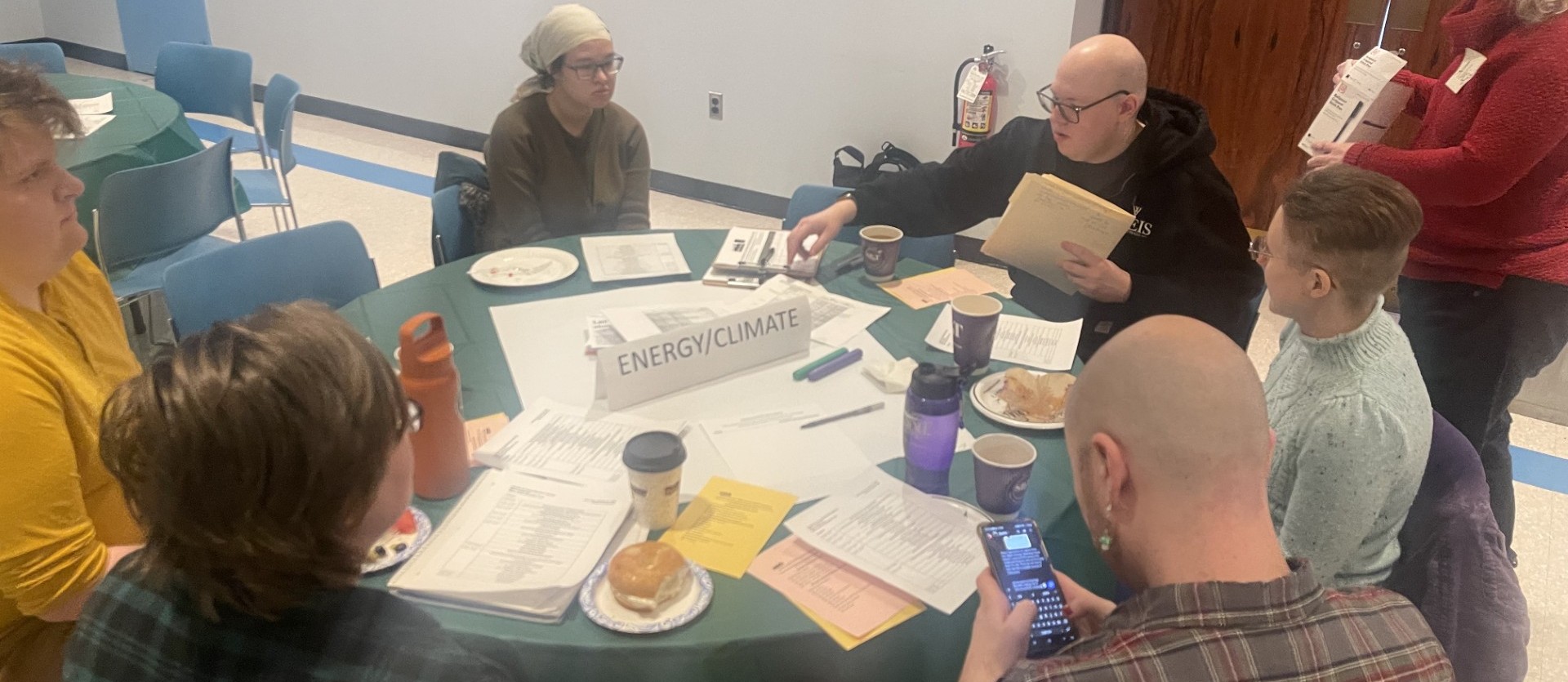
Each approach to organizing has its pitfalls and advantages, and some are shared. The sheer magnitude of need, especially during times of fastest concentration of power like the present, can overwhelm the training and discipline of mutual aid organization, so that political education falls by the wayside in the effort to help as many as possible. Meanwhile the long arc of the most impactful issue goals (the 40 hour work week took 40 years to accomplish, even in its limited form) can wear out the patience of the most ardent activist. For both approaches, burnout and conflict borne of emotional exhaustion are dangers as serious as external forces, sometimes more so. But the application of political education and sheer logistical experience, whether through direct aid or organizing for power, increases the capacity of the individuals involved as they learn both what works (and how to measure that) and also how their individual actions and beliefs relate to national challenges.
Each approach also has valuable lessons for the other, and deeper solidarity and interaction among mutual aid and issue organizations can only lead to shared benefits, even while they maintain their individual strategic goals. Mutual aid expertise in emphasizing individual capacities to create effective local economies, the tight local networks it engenders, and the sheer gratification of giving as a powerful motivator can all work well with issue-oriented mobilizations that target pillars of centralized power. Mutual aid lends itself well to base-building, especially at the neighborhood level, where the bonds built among near neighbors learning to help each other with immediate needs can sustain a strong organization ready to spread the word to act on issues as they arise. People who become interested in leading at the block and neighborhood level can then learn about issues that would have wider impact, and how to strategize and organize with other neighborhoods to win larger results. As we navigate a time where the centralized government is so actively working to weaken localized bodies through defunding and divisiveness, issue organizations like Metro Justice and mutual aid organizations like many of our allies have a great deal to share with one another, and a great deal to gain by working closely together.
UPCOMING EVENTS





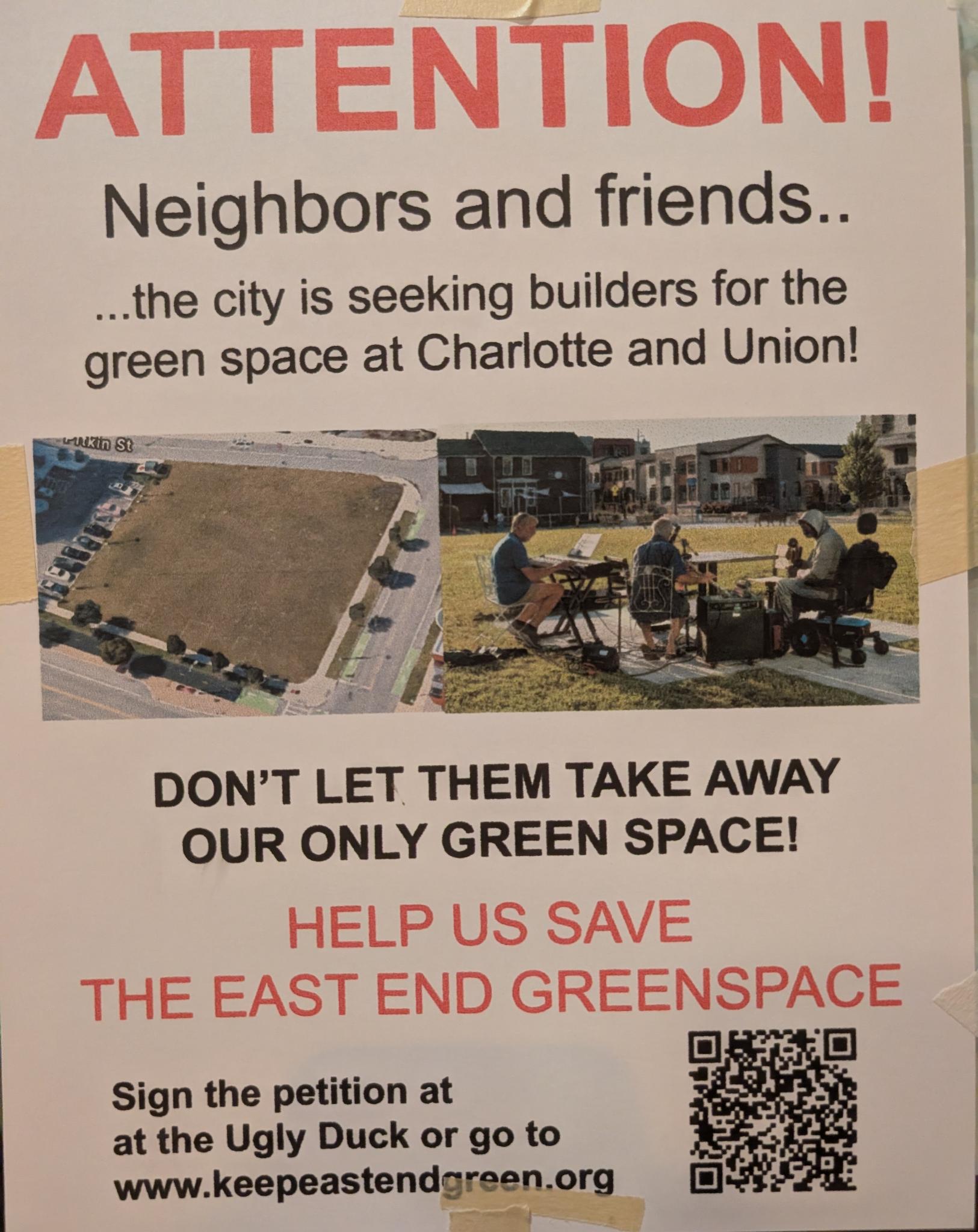
Tonight, February 16, 7-9 pm at Immanuel Baptist Church, 815 Park Ave., Citizen Action is hosting a Community Outreach Forum about building a state that works for all New Yorkers. From making housing actually affordable, to protecting our immigrant communities, to raising the minimum wage, bring your thoughts and your questions!
Tuesday, February 17, 5-6 pm NYPIRG zoom discussion on next steps we can take to protect the Climate Leadership & Community Protection Act, aka, the Climate Law.
Thursday, February 19, 5-6 pm Rally at City Hall with Voiceless of Verona St. demanding city and county take responsibility for stray animals.
Thursday, February 19, 8-10 pm ICE Melt at Lux Lounge, 666 South Ave. Salsa dancing with DJs Black Nasa and Gaby Baby! $5 cover charge; all proceeds go to the Worker Justice Center of NY's Client Assistance Fund. Too late to party for you? Donate directly to the Worker Justice Center. (Use this link; the QR code on the flier has expired.)
Saturday, February 21, 1-3 pm Federal Building, End ICE Rally and March, multiple sponsors including Indivisible, DSA, 50501 and Citizens’ Impeachment. Attendees are encouraged to bring personal care and hygiene items for mutual aid.
Wednesday, February 25, 7-8:30 pm Community Defense and ICE Watch 90-minute training: Register here.
Tuesday, March 10, 5 am-8 pm Join a huge cross-movement action at the New York State Capitol supporting immigrant rights, housing, and climate action. RSVP here if you can help represent Rochester! Free bus transportation and lunch provided.
Saturday, March 21, 6-9pm Fundraiser concert in Newfield, NY with 100% of proceeds going to legal fees to oppose an AI Data Center on Cayuga Lake.
Saturday, May 9, 5-8 pm Metro Justice Annual Dinner, AFSCME Hall, 1956 Lyell Ave (just east of 390 Lyell Ave. exit)
DESKTOP ACTIONS
Governor Hochul wants to roll back critical parts of NY’s climate law. But you can’t change the rules because you’re losing the game. We know that weakening the law will undermine our climate commitments and force New Yorkers to pay higher and higher energy costs. NY Renews has provided a 1-click letter to State Senate and Assembly leadership demanding that they hold firm in protecting the climate law and New York communities!
Do you know where your birth certificate is? Three voter suppression bills (the SAVE Act) in the federal House and Senate would force Americans to present a passport, birth certificate, or other citizenship papers in order to register to vote in federal elections, and are clearly designed to deter millions of people from casting their ballot in our democracy. Click here to send an email to your federal representatives.
LEARN MORE
Mutual Aid, by Dean Spade, is an excellent guide from 2020 that is being being pulled out and brushed off in the wake of the startling success of the Twin Cities in bringing ICE to a standstill and into national disrepute. All accounts agree that their extraordinary work and sacrifice is built on a longstanding foundation of neighborhood solidarity and mutual aid. If Rochester is to prepare for similar mass organization we would do well to learn from their example. This recommendation is being repeated this week to give people more time to check it out. It is available to purchase here, and to borrow in audiobook format through the Rochester Public Library’s hoopla, as well as one paper copy at the Maplewood branch (currently checked out). There is also a nice 2-part book review podcast with excerpts, and this handy Study guide has been created on Radical In Progress. If you have thoughts on what we can learn from Minnesota, click here.
Showing 1 reaction