

As we make signs, rally downtown, petition our legislature to pass the NY4ALL act and lobby in Albany we may wonder what this story looks like from the other side. There are so many people being detained and deported despite our best efforts. Here is the story that one man, Manolo Lopez, shared with Doug Noble through a friend, with the request that it be shared.
Manolo was a happy newlywed working in a rural area of Guatemala with many dreams and plans for his life. Several Canadian and US corporations moved into the area, buying up farms and properties, not only displacing people but also putting locals out of work. Ultimately, there was no work to be found, and the crime rate was so extreme that he decided to leave Guatemala.
Manolo came to upstate New York 19 years ago, walking all the way from Guatemala; trekking through hot deserts, climbing mountain paths, and crossing rivers with his wife. Though he did not want to be apart from his mother and the rest of his family, he left his home because he needed to make a better life for himself and his new wife. He arrived undocumented, and has since made a living for himself and his four children (all born here), working at dairy farms and in retail selling sportswear. He supplemented his income by driving fellow workers to grocery stores and medical appointments.
In 2022, Manolo was racially profiled and picked up by police while driving a fellow worker in distress to medical care. He was cited with being undocumented, placed temporarily in county jail and given a date to appear at the immigration court in Buffalo. At court, the judge filed a motion for his removal, despite his having children, a job (having taxes withheld that he could never file a refund for), and being the main source of support for his family. Manolo secured and paid for a lawyer who filed an appeal to the order. Meanwhile, Manolo was required to check in to immigration court every six months for two years, and he was confined to wearing an ankle bracelet, which prevented him from leaving the farm. His wife learned to drive so she could go shopping, take the kids to school, and do other errands.
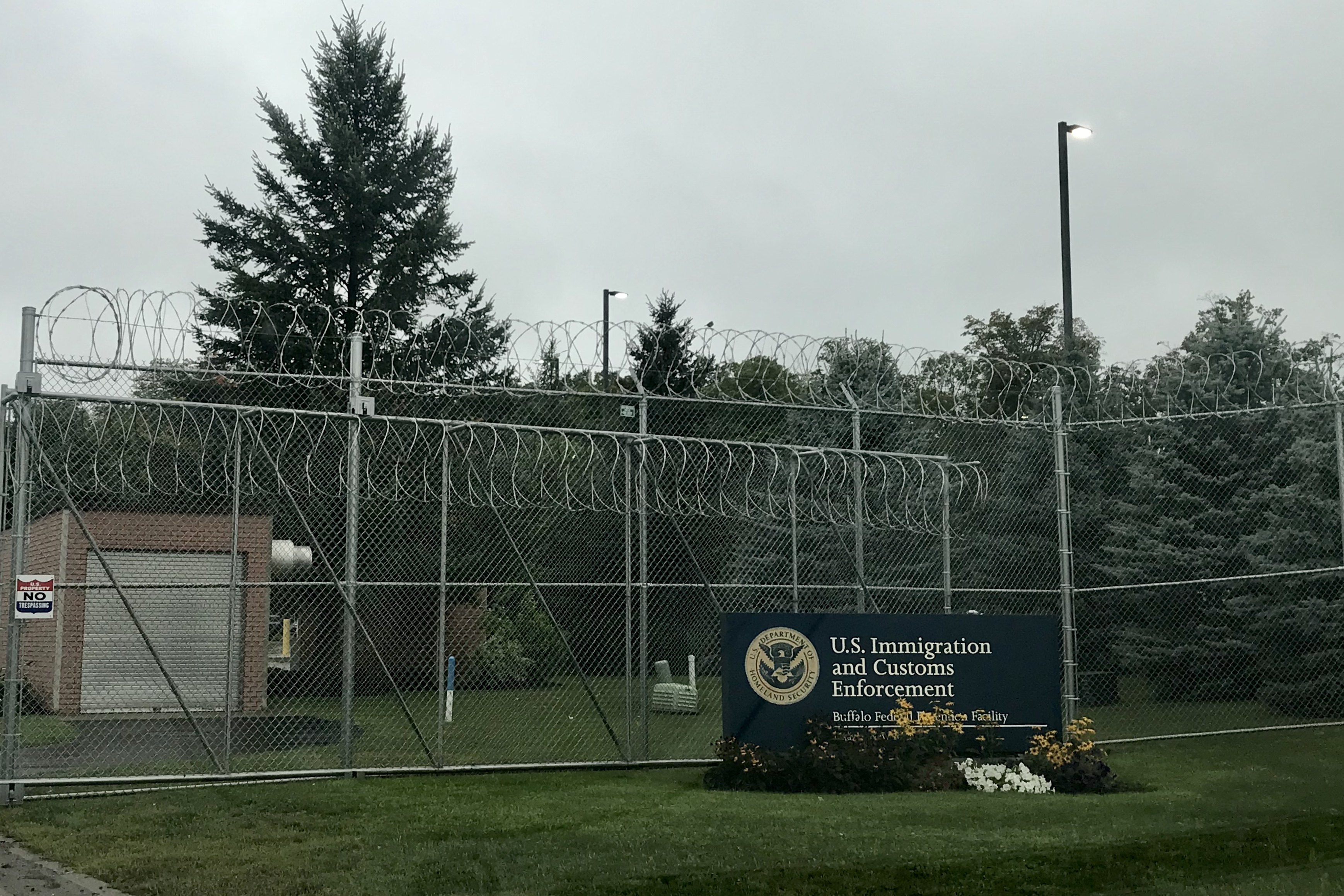
Manolo finished the two year check-in period in February 2025. Meanwhile, the lawyer who filed the appeal lost his license to practice law, for having taken money from many desperate marginalized people like Manolo, and for not following through on doing any of the work he was paid to do. Therefore, the appeal remained in limbo. In October of 2025, the local police unexpectedly called Manolo, requesting that he appear at the police station so they could get a current photo of him. When he arrived at the police station, the police called ICE. (The police worked closely with ICE through a controversial 287(g) Agreement, now being challenged by New York State.) Manolo was then handcuffed and transported to the Buffalo Federal Detention Center in Batavia. Manolo was fortunate to have some money on him, which was deposited into an account for him, so he was able to call his wife to let her know where he was. The majority of people in the Detention Center never get the phone call to which they are entitled, so Manolo allowed other detainees to use his account to make phone calls to their families.
Life in the detention center was an unexpected nightmare. Manolo has serious medical issues, including diabetes and gall bladder problems. Not only was he denied access to his medications, but detainees are often given food only once a day, and the food is often rotten and the milk always spoiled. The detention center is also rife with violence. Manolo was attacked and beaten by another inmate so badly that he had to be hospitalized. The punches and kicks to his face and mouth left him unable to speak for a period of time. Upon returning to the center from the hospital, he was put in solitary confinement for 10 days as “punishment” for the attack. Fellow detainees who had seen the attack and offered to verify that he was attacked and did not take part in a fight, were told that they would be put in solitary confinement if they didn’t “shut up.” While in solitary confinement, Manolo was often not fed any food at all, left in the dark without any lights on for days, and refused mail (it is illegal to refuse a detainee mail while in solitary confinement).
Manolo’s wife sent money to his account so he could continue to call her, and to be able to buy food at the commissary in the Detention Center. When he purchased food, other detainees would threaten to attack him if he didn’t give them the food. Because of this he was placed in solitary confinement several other times while in custody in Batavia. He became depressed and anxious. His feet were so swollen from the diabetes that he couldn’t put on his shoes and could barely walk. He lost 35 pounds while he was in detention (between October 2025 and January 2026).
Manolo and his wife made the decision that they wanted him out of the center. They would rather have him be deported and separated from his children and his wife than have him spend any more time in detention. He asked to be voluntarily deported, but the guards threatened to keep him there for three years. He repeatedly pled for voluntary deportation, but due to the fact that his lawyer's earlier appeal was never properly completed, his request for voluntary deportation was denied.
After much work and support by friends and family, Manolo’s appeal was finally dropped and Manolo was sent to the WINN Correctional Facility in Louisiana, a holding place for people awaiting deportation. The conditions in Louisiana were as horrendous as in Batavia. Food was handed out once a day and it was always rotten, often with worms crawling around in it, and the spoiled milk reeked. A fellow detainee with diabetes was literally on his deathbed, with his blood sugar over 500, having been refused his medication. Manolo, having received his medication when he was transferred out of Batavia, gave him some of his medicine. Manolo again pled to be deported. He was repeatedly denied.The food and the conditions were so horrific in the facility that Manolo initiated a hunger strike. He was deported the next day.
Manolo is now in Guatemala with his mother. His four children and his wife remain in Upstate New York.